1. What information is available in the CCCdb?
Cell-Cell Communication (CCC) is central to the organization, function, and plasticity of multicellular life. Advancing experimental technologies and growing insights into complex multicellular systems and disease microenvironments are driving the demand for experimentally validated CCCs that are systematically and manually curated across diverse tissues, phenotypes, and signaling modalities.
2. Database content and construction
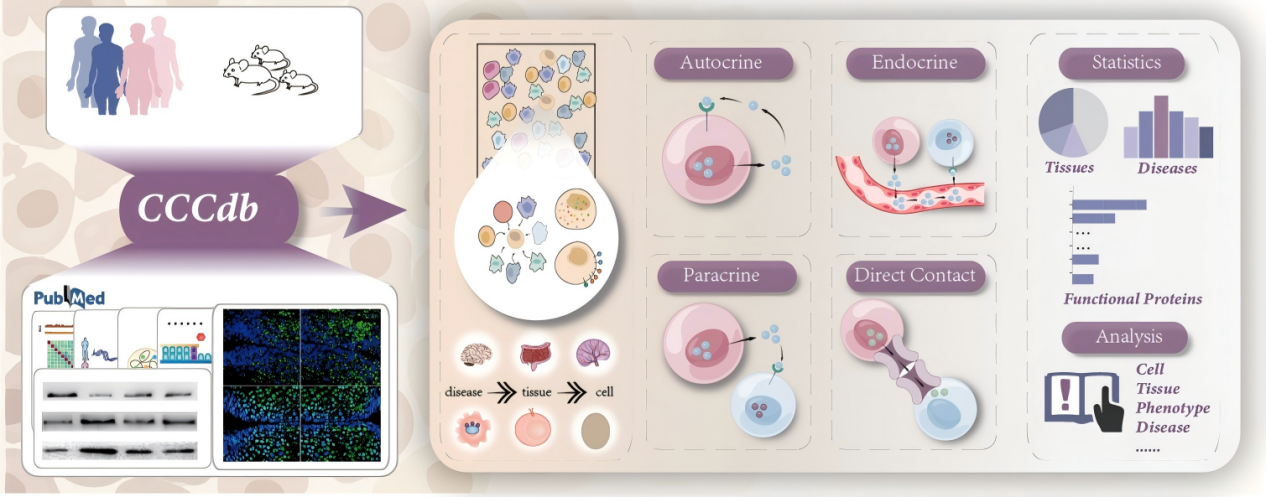
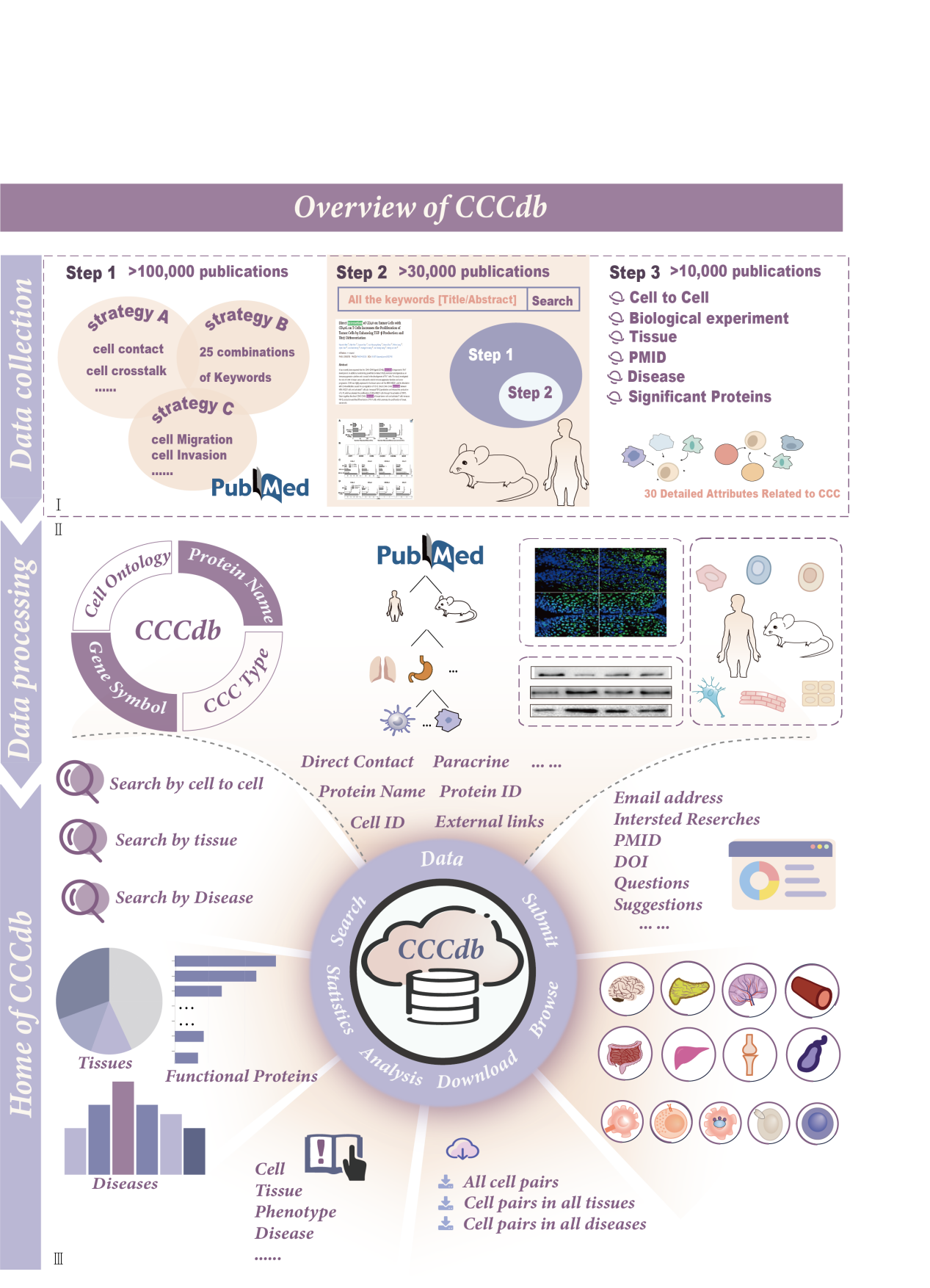
Here, we present CCCdb ([http://www.licpathway.net/cccdb/index.php]), a comprehensive, manually curated database of experimentally validated cell--cell communications for human and mouse. A total of 8,467 entries were extracted from thousands of publications, each annotated with standardized information on cell types, tissues, and phenotypes. These entries cover 98 tissues, 1,132 cell types, and 548 phenotypes, mediated through communication via direct contact, autocrine, paracrine, and endocrine signaling. CCCdb curates experiment-supported CCCs across cellular subtypes, tissue interfaces, and physiological or pathological states. To enhance accessibility and biological interpretability, CCCdb integrates a ReAct-based AI assistant that enables intelligent natural-language queries and intuitive navigation through biological information. We believe that CCCdb will serve as a foundational resource for elucidating the mechanisms by which cells maintain tissue homeostasis and drive disease progression.
3. How to use the cccdb?
3.1. Search
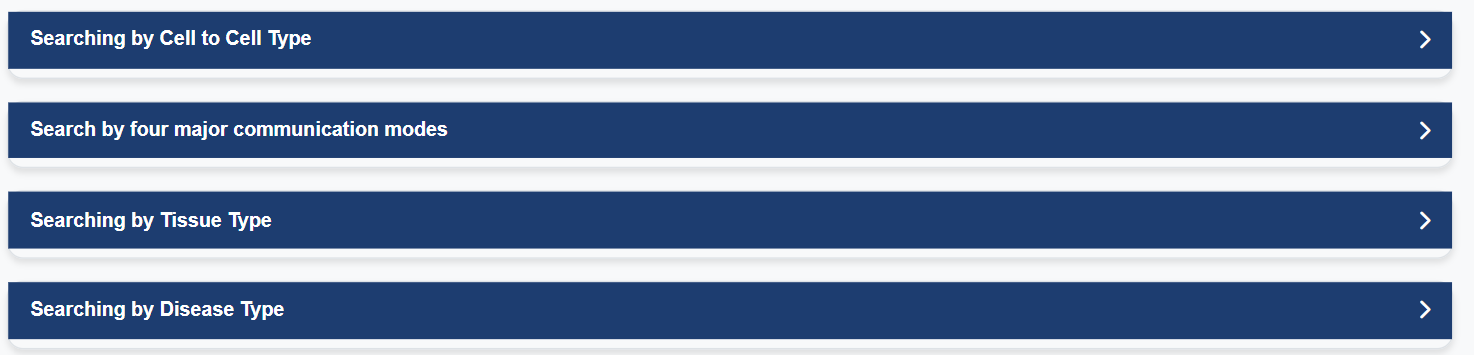
Users can search genes through four ways, including'Searching by Cell to Cell Type','Searching by four major communication modes', 'Searching by Tissue Type' , 'Searching by Disease Type'.
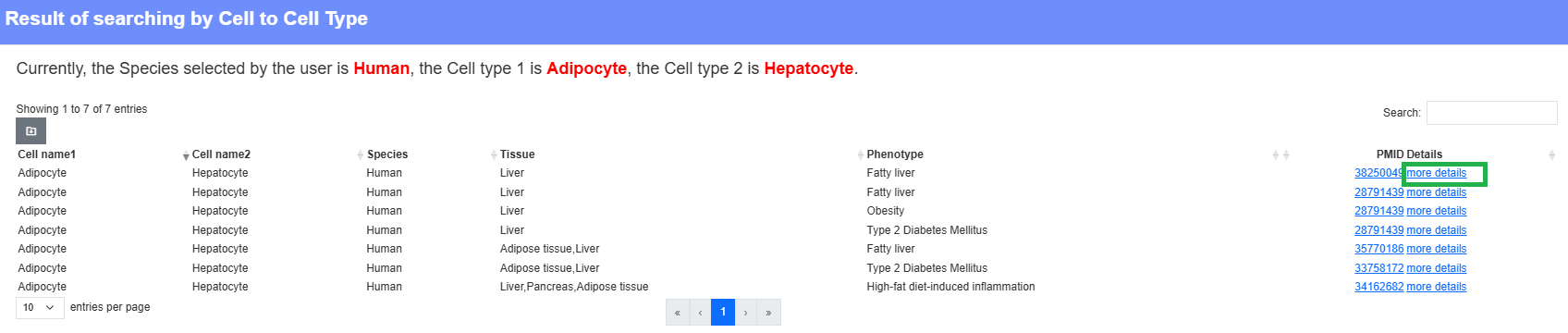
3.1.1. Search by Cell to Cell Type
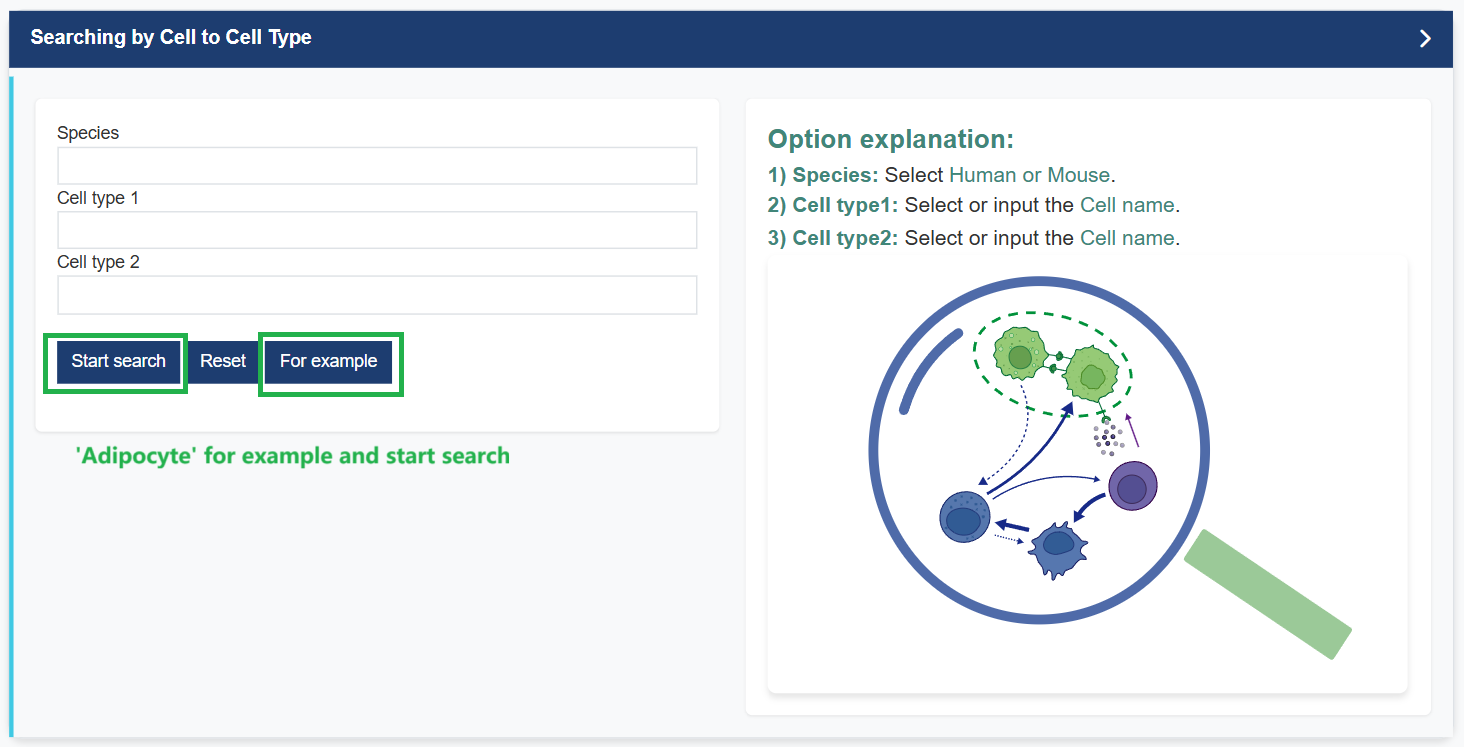
Users searches for tissues and cell types, and CCCdb will return detailed information, including gene information in tissues and cell types, and text cloud pictures about gene distribution in tissues and cell types.
3.1.2. Searching by four major communication modes
Users can search genes through four ways, including'Search by Cell to Cell Type','Search by four major communication modes', 'Search by Tissue Type', 'Searching by Disease Type'.
3.1.3. Searching by Tissue Type
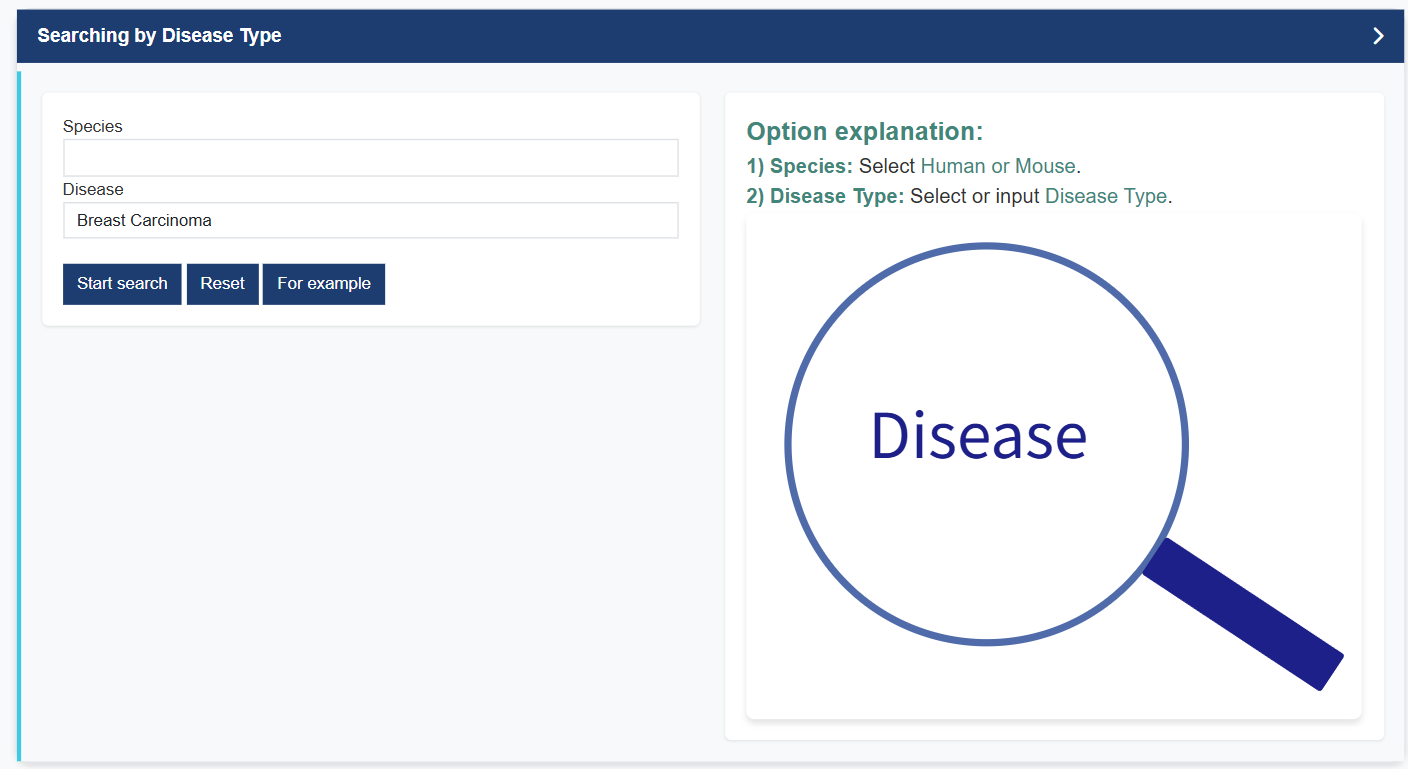
3.1.4. Searching by Disease Type
3.2. Browse
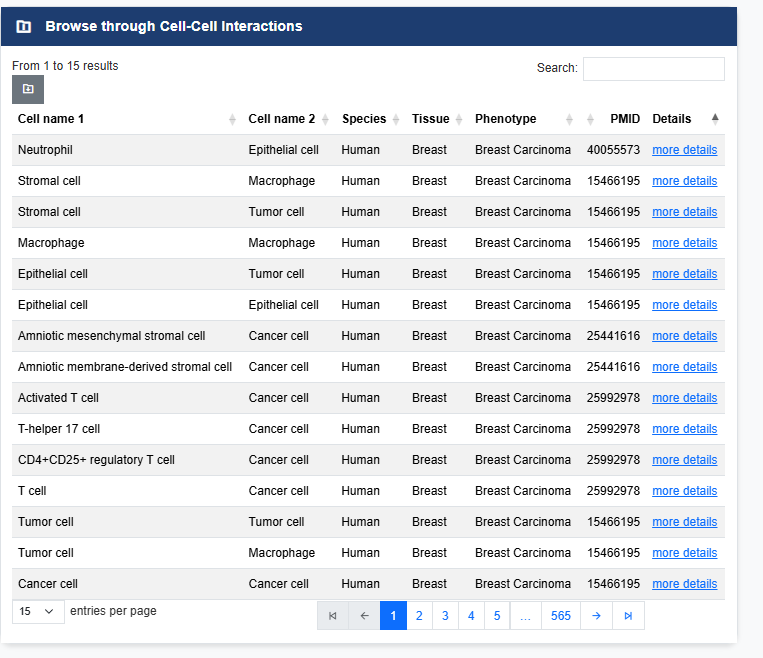
The 'Browse' page of CCCdb features an interactive, paginated table that allows users to efficiently explore experimentally validated CCCs. Users can apply customized filters based on 'Species', 'Communication Type', 'Experiment Type', 'Tissue Type' and 'Phenotype'. The table displays detailed information for each interaction, including the interacting cell types, tissue/sub-tissue types, species, phenotype, and the corresponding PubMed ID. The number of entries shown per page can be modified using the 'Entries per page' drop-down menu. In addition, each record is hyperlinked to 'CCC Details', enabling direct access to supporting experimental evidence
3.2.1. Browse through Cell-Cell Interactions
3.3 Using the AI-Assistant in CCCdb
The AI-assistant in CCCdb allows users to explore cell--cell communications (CCCs) with natural language queries.
-
Natural language search: Simply type questions such as "paracrine" or " T cell and malignant cell."
-
Smart results: The assistant applies NLP to return structured outputs with relevant supporting information.
-
Pathway-based queries: Users can input a pathway name (e.g., MAPK) and click Analyze to retrieve all CCCs associated with that signaling pathway.
-
Enhanced accessibility: By integrating literature evidence and clarifying signaling mechanisms, the assistant makes CCC data easier to access and interpret.
This feature helps researchers rapidly uncover complex intercellular communications and potential therapeutic targets across diverse biological contexts.
3.4 Submit
Users can submit "CellA Name", "CellB Name", "CL_ID", "Tissue Name", "experiment name", "Pubmed ID" and the description of cell-cell communication in the literature through the submit page.
3.5 Download
CCCdb allows users to download all communications in human and mouse. In addition, users can retrieve communications by selecting one of the four communication modes, according to their research interest. The database also supports downloading communications specific to disease or normal phenotypes, enabling comparative analyses across biological progress.
4. Statistics
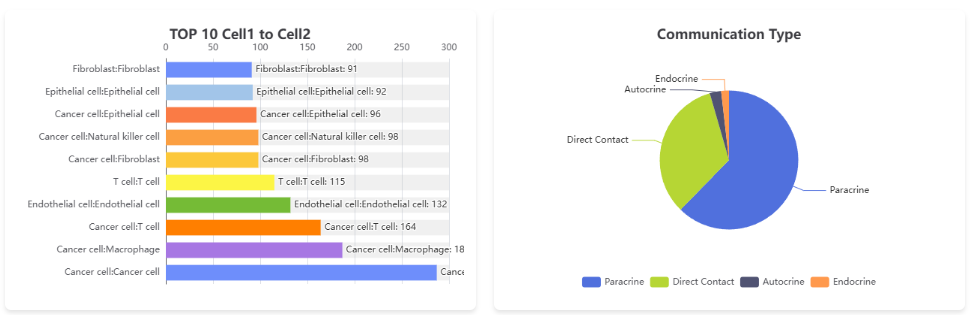
Top 10 cell1 to cell2 and four major communication modes
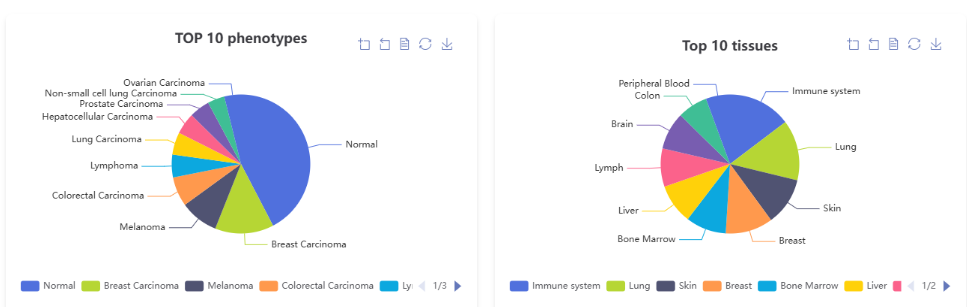
TOP 10 phenotypes and TOP 10 tissues
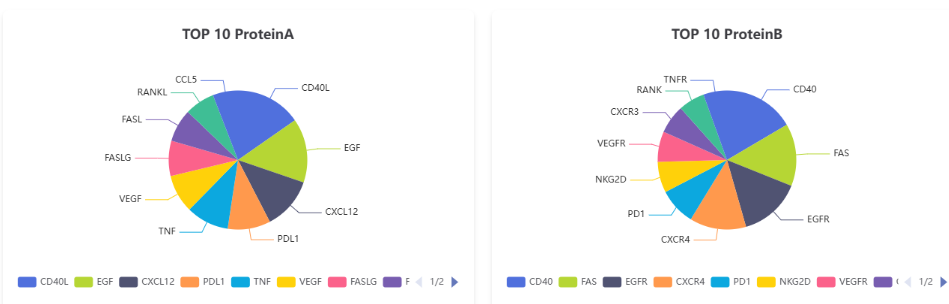
Top 10 ProteniA and Top 10 ProteinB
5. Development environment
The current implementation of CCCdb is built on MySQL (v5.7.27) and hosted on a Linux-based Apache web server. Server-side functionality is supported by PHP (v5.6.40), while the user interface is constructed using Bootstrap (v3.3.7) and jQuery (v2.1.1). Interactive data visualizations are rendered using ECharts. For optimal display and compatibility, modern browsers that fully support HTML5---such as Firefox, Google Chrome, or Safari---are recommended. CCCdb is freely accessible to the scientific community without the need for user registration or login. The online portal is available at: [http://www.licpathway.net/cccdb/]. Source code for the PHP framework is publicly available on GitHub ([https://github.com/TOSTRING-Z/cccdb]), and the complete dataset can be accessed via ([https://zenodo.org/records/16877264]).